
When the Safe Haven Breaks: Capital, Confidence and the Gulf
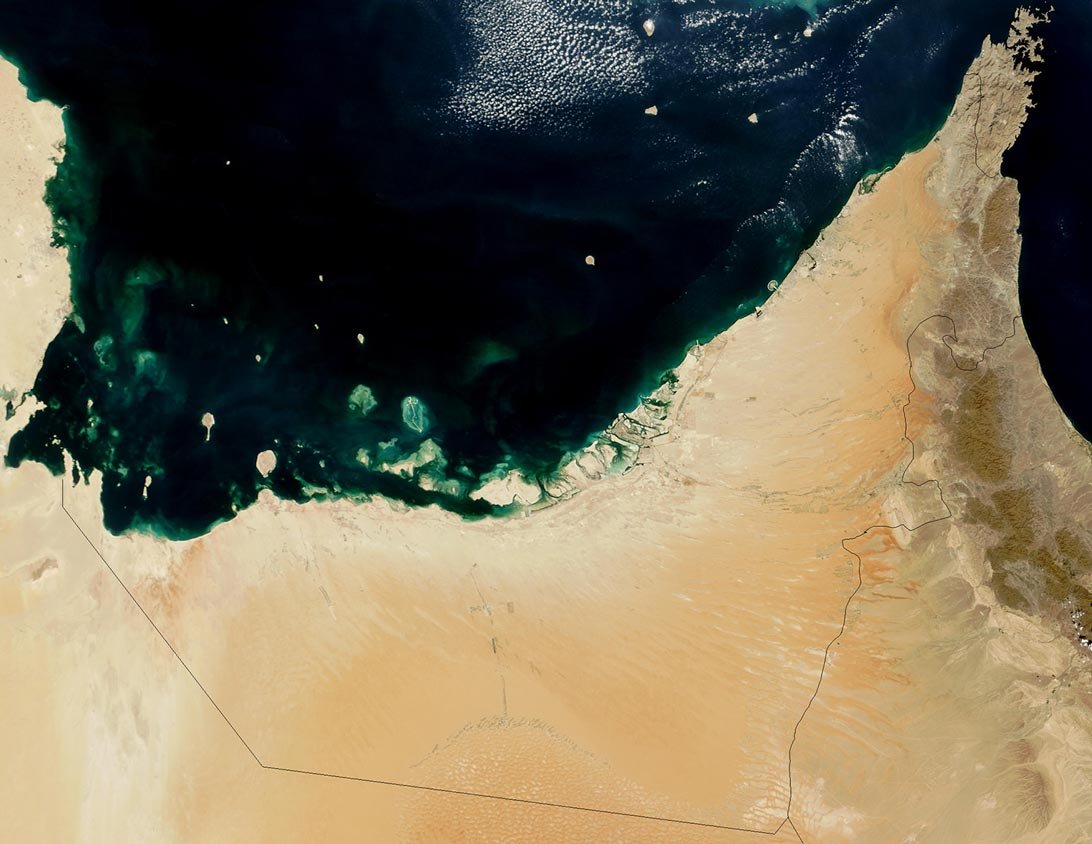
For more than a decade, the United Arab Emirates built one of the most compelling wealth propositions in modern economic history. Zero income tax. Golden visa programmes. World-class infrastructure. A geographic bridge between Europe and Asia. And, above all, a carefully cultivated ‘perception’ of stability in an otherwise volatile region.
It worked. In 2024, more than 200 new family offices joined the Dubai International Financial Centre, bringing the total to 800. The UAE attracted a net inflow of 9,800 millionaires in 2025, making it the world’s most popular destination for relocating wealth, according to the Henley Private Wealth Migration Report. Assets under management across the UAE surpassed AED 1.2 trillion. Gulf sovereign wealth funds collectively deployed a record $119 billion in a single year.
The narrative was clear: the Gulf was open for business, and the world’s wealthiest families were responding.
Then, on 28 February 2026, the United States and Israel launched strikes on Iran. Tehran retaliated. And in a matter of days, the foundational assumption underpinning the Gulf’s entire wealth proposition was tested in a way that no marketing campaign, tax incentive, or golden visa could offset.
The assumption was stability. And the test was perception.
The Gulf’s Rise: A Decade of Strategic Positioning
Understanding what is now at stake requires understanding what was built. The UAE’s transformation into a global wealth hub was not accidental. It was a deliberate, state-led strategy executed with remarkable discipline across multiple pillars: fiscal policy, regulatory design, infrastructure investment, and, critically, narrative management.
Dubai and Abu Dhabi positioned themselves as jurisdictions where ambition, capital, and lifestyle could converge without the friction that characterised traditional European and Asian financial centres.
For wealthy families from the United Kingdom, where capital gains tax hikes, inheritance tax changes, and the overhaul of the non-domiciled tax regime drove a record 16,500 millionaires to leave in 2025, the UAE offered an obvious alternative. For Chinese-origin families who had established themselves in Singapore, some relocated to Dubai seeking lighter regulatory oversight and proximity to emerging markets. For families in Switzerland and Monaco, the UAE provided comparable lifestyle quality with better connectivity to Asia and the Middle East.
The data confirms the scale of this migration. The Henley Private Wealth Migration Report 2025 recorded a record 142,000 millionaires relocating globally, with projections of 165,000 for 2026. The UAE sat at the top of every inbound ranking. Gulf sovereign wealth funds, managing approximately $6 trillion (over 40% of the global total according to Deloitte), were simultaneously deploying capital outward at unprecedented scale, investing $9.5 billion into China alone in the year ending September 2024.
The UAE’s most valuable asset was never its tax rate. It was the perception of stability.
This was not simply a tax story. It was a perception story. Families chose the UAE because they believed it was safe, stable, well-governed, and strategically positioned. That belief was the most valuable asset in the Gulf’s portfolio.
The Iran Conflict: A Trigger for Reassessment
The US-Israeli strikes on Iran and Tehran’s retaliatory campaign across the Gulf did not create a new risk. Geopolitical proximity to Iran has always been a feature of the region’s geography. What the conflict did was make that risk visible, visceral, and impossible to ignore.
Iranian missile and drone strikes hit every member of the Gulf Cooperation Council. Dubai International Airport, the world’s busiest hub for international passenger traffic, suspended operations. Abu Dhabi’s airport was struck. QatarEnergy halted all LNG production after Iranian drones hit facilities at Ras Laffan, the world’s largest LNG hub. The Strait of Hormuz, through which approximately 20% of global oil and 20% of global LNG supplies transit, was effectively closed, with 500 ships anchored in open Gulf waters rather than risk passage.
The economic data has been stark. Brent crude surged from $72 to over $106 per barrel within days, with LNG prices rising 60%. JPMorgan cut UAE non-oil GDP forecasts by 2.3 percentage points, the steepest downward revision in the GCC bloc. The Middle East Council on Global Affairs estimated Gulf aviation losses at $40 billion. Three of the four largest GCC economies began reviewing their sovereign wealth fund deployment strategies, according to Reuters, including possible investment pledge reversals and re-evaluation of global sponsorship deals.
But the numbers, significant as they are, tell only part of the story. The deeper impact is reputational.
As the Carnegie Endowment for International Peace observed, the Gulf states’ economic diversification strategies rest on the perception of stability. Attracting tourists, building data centres, and sustaining complex logistics hubs requires confidence that these are safe and peaceful jurisdictions. When images of explosions circulate globally, that confidence is tested regardless of how quickly physical infrastructure is repaired.
For a chief investment officer or a family office principal, the question is no longer abstract. It is whether the jurisdiction where your family’s capital is domiciled, where your children attend school, where your operational headquarters sits, is within range of ballistic missiles fired during a conflict you did not choose and cannot control.
Capital in Motion: The Evidence
Within days of the first Iranian strikes, the evidence of capital reassessment began to emerge.
Reuters reported on 6 March 2026 that scores of wealthy Asians were making enquiries or taking steps to move Dubai-held assets to Singapore and Hong Kong. A Singapore-based private wealth lawyer told Reuters that six or seven of his 20 Dubai-based clients, each holding an average of $50 million in assets, contacted him in a single week, with three planning immediate transfers. Anderson Global reported 10 to 20 family offices enquiring about relocating assets from the Middle East to Singapore in the same period. The CEO of Phillip Private Equity noted that 10 to 20 predominantly Asian clients were asking about moving their wealth to Singapore to preserve capital.
One observation from a senior figure at Anderson Global captured the shift precisely: tax benefits, she noted, may no longer be the top priority for these families. A Singapore-based wealth adviser, who had spoken to 13 UAE-based clients with more than half serious about moving, framed it differently: even if the conflict ends tomorrow, the confidence challenge remains.
A runway can be resurfaced in weeks. Confidence in a jurisdiction’s long-term stability takes years to rebuild.
Nikkei Asia reinforced this framing in its reporting on 13 March, noting that the image of the UAE as a safe haven had been shattered even if fighting ends. This is the critical insight. Perception damage does not repair on the same timeline as physical infrastructure.
It is important to note that not all capital is leaving. Some wealth managers report no serious capital flight discussions, and several family office principals have confirmed that their plans remain unchanged provided the UAE does not become directly involved in the conflict. The picture is nuanced. But the direction of travel, for a meaningful segment of mobile wealth, is clear: reassessment is underway, and the basis of decision-making has shifted.
The New Decision Hierarchy: Safety Before Tax
For the past decade, the dominant question for globally mobile wealth was straightforward: where do I pay the least tax? That question drove the migration to Dubai, Abu Dhabi, and other Gulf jurisdictions. Zero income tax, no capital gains tax, no inheritance tax, combined with golden visa access and lifestyle quality, made the proposition almost irresistible.
The Iran conflict has introduced a new question that sits above tax in the decision hierarchy: where is my capital safest?
This represents a fundamental reordering of priorities for family offices and ultra-high-net-worth individuals. Tax remains a factor, but it has been subordinated to risk management and mitigation. A zero-tax jurisdiction offers limited value if your airports are closed, your shipping lanes are blocked, your bank transfers encounter technological glitches from cyber conflict and damage to data cebtres, and your insurer has withdrawn war risk coverage.
BlackRock’s 2025 Global Family Office Survey, conducted before the Iran conflict escalated, already showed this shift gathering momentum. 84% of the 175 single-family offices surveyed (overseeing more than $320 billion) cited geopolitical uncertainty as the most important issue influencing their capital allocation decisions. 60% were pessimistic about the global outlook, the first negative sentiment since the survey began in 2020. 68% were focused on increasing diversification.
The new hierarchy: safety first, then regulatory quality, then tax, then lifestyle.
The Iran conflict has accelerated a trend that was already in motion. It has not created a new dynamic so much as made an existing one undeniable.
Where Does Capital Go Now?
Capital does not disappear. It relocates. The question is where, and on what basis.
Singapore is the most obvious beneficiary. The city-state had already seen a tenfold increase in single-family offices, reaching over 2,000 by the end of 2024, according to the Julius Baer Family Barometer. The Monetary Authority of Singapore introduced a three-month processing target for family office tax incentive applications in July 2025, signalling a clear intent to streamline access. Singapore offers what the Gulf currently cannot: perceived geopolitical neutrality, regulatory maturity, and physical distance from the Middle East conflict zone.
European alternatives are also in play. Luxembourg offers deep institutional infrastructure as an established fund domicile. Monaco provides lifestyle appeal with proximity to European financial centres. The European Commission is reviewing the EuVECA Regulation with adoption planned for Q3 2026. Switzerland retains its traditional strengths in discretion and stability.
The United Kingdom presents a more complex picture. Historically, every major Middle East oil shock has driven Gulf capital into London property and financial markets. But the UK’s current tax environment, including the recent capital gains, inheritance tax, and non-dom changes that drove the record millionaire exodus, may prevent history from repeating. Regulatory reform is underway, but regulatory architecture alone cannot overcome a tax perception gap that is actively pushing wealth and the creators of wealth and growth outward.
What Governments Must Understand
The jurisdictions that capture the reallocation of Gulf-exposed wealth will be those that understand a fundamental truth that I have presented for many years: reputation is strategic capital.
The UAE spent decades building its reputation as a stable, welcoming, and efficient destination for global wealth. That reputation was its most valuable competitive asset, more important than any individual tax incentive or visa programme. Look at how Dubai was perceived and talked about in the UK and other jurisdictions before the regional conflict. The Iran conflict has demonstrated how quickly reputational capital can be eroded by events outside a jurisdiction’s control.
For governments competing for mobile wealth, the lessons are clear. First, compete on stability and governance, not just tax rates. Second, streamline regulatory frameworks for family offices and wealth structures. Singapore’s three-month approval target sets the benchmark. Third, invest in perception management. Fourth, recognise that capital allocation decisions are now driven by a hierarchy: safety first, then regulatory quality, then lifestyle, and then tax.
The Longer View
None of this should be read as a prediction that the UAE’s wealth story is over. The Gulf states possess extraordinary financial reserves, deep sovereign wealth fund portfolios, and a track record of rapid recovery from crisis. The region’s strategic importance to global energy markets and its position as a bridge between East and West remain structurally significant.
But the Iran conflict has revealed something that cannot be unseen. The perception of safety, the single most important factor in a family’s decision about where to domicile their wealth, is not a permanent asset. It must be maintained, protected, and, when tested, actively rebuilt.
For those of us who work at the intersection of reputation, trust, perception, and investment, the signal is clear. Capital follows trust. Trust follows perception. And perception, once disrupted, does not return on command.
The competition for global wealth is entering a new phase. The jurisdictions that understand this will define the next decade of capital flows.
This article is part of Reputation Matters, my regular analysis on trust, perception and strategic risk for leaders in investment, government and technology.
Subscribe on Substack to receive the next piece directly: twofourseven.substack.com