Man City 115 Verdict: A Reputation Crisis for Everyone
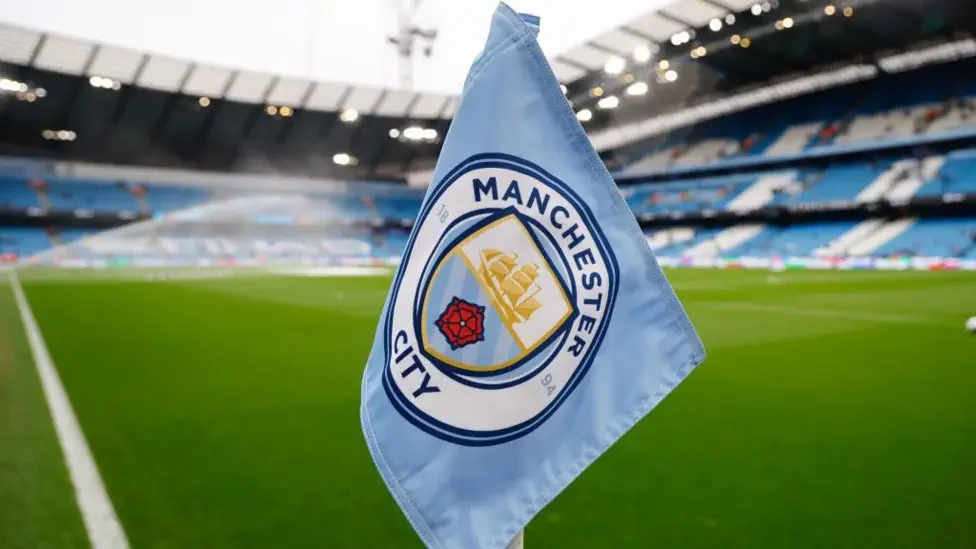
Three years, seven months and a leak. That is how long it’s taken for English football to hear what many had long suspected. On Friday, the news broke that an independent commission had found Manchester City guilty on 114 of the 115 charges brought by the Premier League. The formal decision is yet to be published and sanctions have yet to be set. As throughout each stage of the case City have stated that they are innocent and will appeal.
But the feeling in the game is already clear. It was 2023 when the charges were made and everyone was close to exhaustion. In fact, knowing the fast pace at which other clubs like Everton and Chelsea were dealt with, the mood against Manchester City has turned to anger for what hey have alleged to have done..
I should declare my interest. I am an Arsenal supporter, and I don’t hide it. Those that know me know my allegences. And they also know that I can put these aside when I deliver my own advisory and counsel.
Yes, last season, after 22 years, Arsenal finally won the league again, finishing ahead of City on the final stretch. But this is not a story about one club's grievance. It touches every club that competed in the Premier League between 2009 and 2018, and every club that fell through the trapdoor into the Championship while City were building their empire on what a commission has now found to be misreported foundations.
I also want to be fair. Pep Guardiola is one of the finest coaches the game has seen. In ten years he won 20 trophies, including six league titles, four of them in a row, and the club's first Champions League. At FC Barcelona, he delivered titles. His philosophy transformed squads. He enabled the teams he coached to play the beautiful game with intelligence and beauty, and a bit of bite when needed.
But great coaching needs a great squad, and that squad should never have been able to be assembled on the financial platform it had in the years after the takeover of the club. That is the uncomfortable truth at the heart of this verdict. It also raises a bigger question, one that reaches well beyond the Etihad: what does this do to the reputations of everyone who enabled it?
A national asset, not just a league
Created in 1992, The Premier League is one of Britain's most successful exports. According to EY's latest analysis, published in August, it is broadcast in 189 countries and claims 1.9 billion followers worldwide. Its broadcast exports reached £1.8 billion in 2024/25, close to the rest of the UK television sector combined. EY forecasts it will generate £33 billion for the UK economy over the three seasons to 2027/28.
Those numbers matter, but the League's value to Britain goes beyond pounds. For millions of people who will never visit Manchester, Liverpool or London, a Saturday afternoon kick-off is their most regular point of contact with this country. The League itself told Parliament it plays a significant role in the UK's soft power, exporting UK values alongside its football.
That is the point. When you export a product built on competition, you also export a promise: that the competition is fair.
Yet, with the reach that the Premier League had in early 2000s, it was in 2003 when Roman Abramovich bought Chelsea, then between 2005–2007 The Glazers bought Manchester United. All that before Thailand’s Thaksin Shinawatra in 2007, the same year that Stan Kroenke took a stake in The Arsenal that he now fully owns. Then in 2008, Abu Dhabi United Group bought City, bringing the backing of a Gulf ruling family into English football. The fact is that the UK has never been shy of attracting international investors.
Fair play is part of the nation brand
When you travel the world, for business and pleasure, you notice how Britain sells itself to the world and what it is seen as, with a focus on fairness, the rule of law, great education and institutions you can trust. They are why investors bring disputes to London courts and why capital settles here. The Premier League is, in effect, a weekly global advertisement for those values.
How the English Premier League is perceived matters, because how it acts after the alleged findings will impact how the UK is perceived. In Brand Finance's Global Soft Power Index 2026, the UK fell to fourth, its lowest ranking to date, recording the second-steepest drop of any nation. Brand Finance warned that control over the UK's image is, sadly, increasingly slipping away.
So this verdict cuts two ways. It shows that English institutions will, eventually, hold even the most powerful to account. But it also shows that for the best part of a decade, rules that applied to everyone were not enforced on everyone. For a country whose reputation rests on fair process, ‘eventually’ is not a comfortable word, especially when after so long there is a demand for justice to be served.
The cost that trickles down
What the Premier League created is what is known as the Football pyramid. Money made at the top, flows down. Yet, what is not managed within the top clubs affects everyone. The impact of one club not following the rules damages everyone else.
In 2003, when Roman Abramovich bought Chelsea, Arsenal's then vice-chairman David Dein captured the shock in one line: "Roman Abramovich has parked his Russian tanks on our lawn and is firing £50 notes at us." Twenty years later, he updated that statement and said that the new owners, were firing €500 notes.
Because of the increase in popularity in the Premier League in the early 2,000s Arsenal realised that it had to move from Highbury to The Emirates. It financed the stadium through borrowing and not an owner's chequebook. That meant selling before buying. And too often, the buyer was Manchester City. Emmanuel Adebayor and Kolo Touré went in 2009. Gaël Clichy and Samir Nasri followed in 2011. Bacary Sagna joined later. Every one of those moves happened inside the 2009–2018 period the commission has now examined. City's then chief executive, Garry Cook, called it an "accelerated acquisition strategy".
Arsenal were not alone. Every club that finished fourth instead of third, missed out on Europe, or lost players to inflated wages paid a price. Some of those clubs are now in the Championship.
Then compare the treatment of others like Everton, who lost eight points in 2023/24 for breaching profit and sustainability rules, or Nottingham Forest who lost four, reduced partly because they admitted the breach early and cooperated. Both cases were resolved within a season. City's case has taken more than three and a half years to reach a verdict, and 35 of the 115 charges concerned alleged failures to cooperate with the investigation. Only one charge, we are told, has been dismissed.
Abu Dhabi's perception problem
Of course, the strategy adopted by Manchester City was to insist it was innocent and is a private entity. Formally, that is true. But Sheikh Mansour bin Zayed Al Nahyan, who bought the club through Abu Dhabi United Group in 2008 for a reported £200 million, is also Vice President and Deputy Prime Minister of the United Arab Emirates, and brother of its President. When City won the Champions League in 2023, he described the title as the result of a deliberate strategy developed 15 years earlier.
That strategy worked brilliantly for the UAE's image. In Brand Finance's 2026 index, the UAE held tenth place for a fourth consecutive year, improving its ranking on governance. That is exactly why this verdict matters in Abu Dhabi. A commission has reportedly found that the nation's most visible global asset misreported its finances for nearly a decade. It is hard to build a reputation for sound governance while the flagship carries 114 findings against it.
A clash of cultures
Underneath the legal detail lies a collision of two operating models.
One is built on relationships, discretion and decisive top-down direction. It has delivered remarkable results in the Gulf: infrastructure, investment, global convening power. The other is the English model: written rules, independent adjudication, disclosure, and the expectation that even the most powerful submit to process.
City approached the Premier League as an adversary to be out-argued, not a regulator to be satisfied. Promises of "irrefutable evidence", challenges to the league's own rules, and 35 charges concerning cooperation all tell the same story. In a system built on disclosure, treating process as the enemy is itself the offence. And that action impacts perception and reputation more broadly.
The LIV Golf lesson
And when you want to buy reach and influence, let’s not just look at Manchester City. Look at gold and how Saudi Arabia's Public Investment Fund launched LIV Golf in 2022 to disrupt the professional game. Multiple reports estimate it put more than $5 billion into the venture. Yet for what it created, In April this year, PIF announced it would fund LIV only for the remainder of the 2026 season. The tour's original format has since come to an early end, with its future dependent on new, smaller backers.
LIV did change golf. It forced the PGA Tour to rethink prize money and its schedule. But it never won the argument that mattered: legitimacy. From its first event it carried the label of sportswashing, and no volume of spending removed it. And that is a lesson, for legitimacy outside of your home market you have to understand the values that matter to the majority, a lesson that applies directly to Manchester City. Investment can buy players, trophies and attention. But it has seriously failed in buying trust, because that trust comes from how you behave when the rules bind you, and from whether others believe you won fairly. Abu Dhabi's investment in Manchester City delivered extraordinary success on the pitch. The question now is whether the verdict turns that success into a liability off it.
The enablers
Yet, it will be Manchester City’s reputation that will take the most visible hit. But it will not be the only one, and maybe that is what strategically, the decision-makers are counting on.
Look at the timeline. Der Spiegel published the Football Leaks allegations in November 2018. The Premier League brought charges in February 2023, more than four years later. The hearing ended in December 2024. The verdict leaked in September 2026. Nearly eight years from allegation to verdict, with sanctions still to come. And yes, all because of discovery and arguments by lawyers.
Meanwhile, UEFA's 2020 attempt to punish City collapsed at the Court of Arbitration for Sport, partly because some charges were time-barred.
Smaller clubs, by contrast, faced swift, in-season punishment for smaller breaches. That contrast matters. A regulator that moves quickly against Everton and Nottingham Forest but takes the best part of a decade over its richest member invites the charge that justice in English football depends on who can afford the lawyers. Even today, the public is still awaiting the Premier League to publish the verdict and supporting arguments.
The enablers include everyone who looked away. The league, for its slow pace. Broadcasters and commercial partners, who profited from City's rise regardless of the questions and suspicions. And those in government who celebrated Gulf investment in English football without asking what came with it. Reputation is shared. When the flagship fails, everyone who waved it through ends up paying a price.
What should happen next
For Manchester City: stop fighting the story. Every year of appeals keeps ‘114/115 charges’ attached to the club's name. The commercial and reputational case points one way: acknowledge the findings, use the appeal as leverage for a negotiated sanction, and settle rival claims collectively rather than one courtroom at a time. Accept independent oversight of governance. Stand by today's players and staff while accepting that the club's historic conduct fell short. Yes, there will be an asterisk over all the titles and trophies, but that is the result of the strategy the club was ill-advised to take. Defiance was a strategy for the hearing. It is a liability now. Think about rebuilding the brand.
For the Premier League: be fast, be clear, be consistent. Publish the reasoned decision in full. Introduce a transparent sanctions framework, so punishment is predictable rather than negotiated. Commit to timelines measured in months, not years. The League's credibility as a global brand rests on one promise: that the result on the pitch was earned within the rules. Slow justice erodes that promise for every club, not just the guilty one.
For investors in sport, from sovereign funds to private equity: perception is part of the asset. Buying a club, a league or an event buys attention, not legitimacy. Legitimacy is earned by respecting the host culture's rules, especially when they are inconvenient. Build in governance, disclosure and compliance from day one. Engage regulators as partners, not adversaries. And remember that a reputation for playing fair outlasts any trophy won without it.
Perception matters
Football fans have long memories. The titles will stay in the record books, or they will not; that is for the commission and the appeal to decide. But the story is already written in the minds of millions who watch the Premier League from San Francisco to Singapore. They will remember a club that won, and a system that took nearly a decade to say how.
That is the real cost of this case. Not the fine, not the points, not even the damages. It is the doubt it plants about English football, and about the country that exports it as a symbol of fair play.
Reputation is strategic capital. Manchester City, Abu Dhabi and the Premier League all spent some of theirs over the past decade. The question now is who acts first to rebuild it.
And maybe, just maybe, in May 2026, when Arsenal did their parade to celebrate their league title. Maybe 1.5 million people turned out on the streets of London, not just because it was Arsenal, but because it wasn’t Manchester City.