Why Reputation Is the New Capital for Single Family Offices
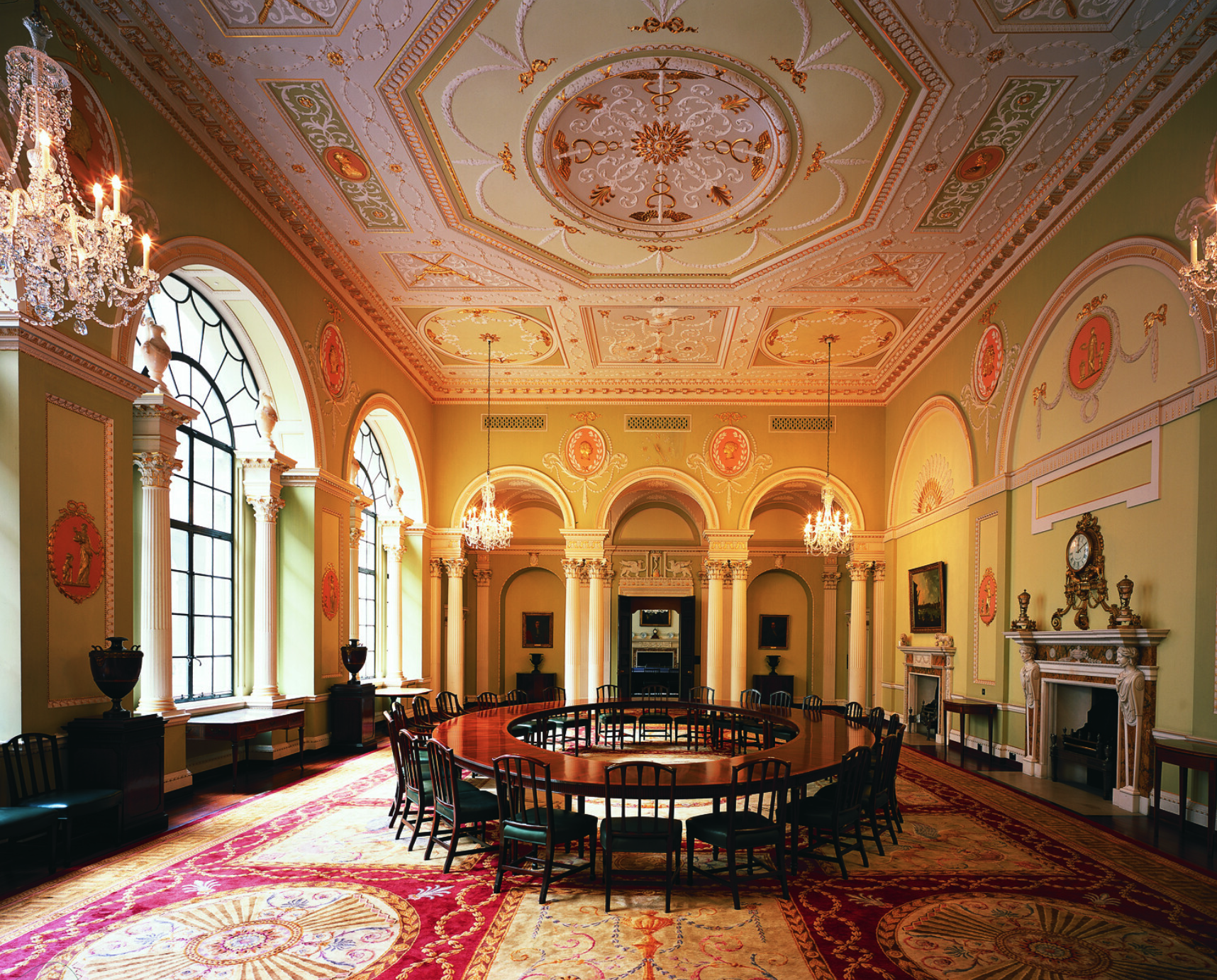
Bank of England Court Room
Something quietly seismic is happening in the world of single family offices. For decades, the SFO was a discreet wrapper around private capital — a small team, a trusted adviser, often a family friend with the keys. The defining characteristic was privacy. The operating mode was improvisation.
That era is ending. In its place, a new institution is emerging: the professionalised family office. Governance frameworks. Independent directors. Non-family executives. Investment committees. Expert advisers. Data platforms. Formal succession planning. Cross-border risk management. Reputation strategy. The ‘great professionalisation,’ as one industry briefing recently called it, is well under way.
And it is moving fast. Deloitte Private puts the current SFO count at 8,030 worldwide, up 31 per cent from 6,130 in 2019, with the number projected to rise a further 75 per cent to 10,720 by 2030. Total assets under management are expected to climb from USD 3.1 trillion today to USD 5.4 trillion by 2030 — at which point family offices will collectively command more capital than the global hedge fund industry. Family wealth is forecast to reach USD 9.5 trillion by 2030, a 189 per cent rise from 2019.
This is one of the most consequential shifts in the private wealth ecosystem of our generation. It matters commercially, because the SFO sector is becoming one of the most influential pools of capital on the planet. It is reshaping private markets, corporate venture capital and sovereign co-investment. It matters structurally, because the decisions families are making today will shape how wealth is governed for the next fifty years.
And it matters, in a way that is rarely discussed in technical terms, because professionalisation is not only a legal, financial or operational exercise. It is a perception exercise.
How a family office is perceived, whether by counterparties, regulators, founders, co-investors, the next generation and the wider market, is increasingly determines the quality of opportunities it attracts, the friction it meets in transactions, the credibility of its successors, and its resilience across generations. That is the argument I want to put forward. And it is one I find myself having, in some form, in almost every conversation with families, their wealth management lawyers, and the fiduciaries who sit alongside them.
The numbers tell the story — but they also reveal the gap
The data across the major industry reports tells a consistent story. Goldman Sachs reports that 51 per cent of family offices are now using AI as operating infrastructure, not as an investment theme. Non-family professionals occupy 63 per cent of Chief Investment Officer roles and 68 per cent of Chief Financial Officer roles. For SFOs over USD 1 billion in AUM, JP Morgan's 2026 Global Family Office Report records average annual operating costs exceeding USD 6.6 million, a reflection of rising demand for institutional-grade talent.
Growth is most striking in Asia. Singapore alone hosts over 2,000 single family offices, a tenfold rise in five years. Asia Pacific has surpassed Europe in SFO count, 2,290 v. 2,020, and is projected to outpace North America in growth speed over the coming decade. Campden Wealth's 2025 Operational Excellence Report found nearly half of family offices have expanded their service offerings in the past two years. RBC and Campden's 2025 North America Family Office Report shows 69 per cent now have a formal succession plan, up from 53 per cent the year before.
And yet, and this is the part worth sitting with, only 41 per cent of US family offices have a mission statement. Only 19 per cent have a formal constitution. Bank of America's 2025 Family Office Study, which surveyed 335 family office decision-makers across North America, found 87 per cent have not yet undergone a leadership transition, even though nearly six in ten expect to within the next decade. Nearly half still lack a functioning investment committee. And 73 per cent of offices with less-involved principals expect the next generation to change the mission or purpose of the office entirely.
These two data sets tell a single story. Family offices know they need to professionalise. Most have not yet done so meaningfully. The window between knowing and doing is narrowing, because the external environment, regulatory, geopolitical, reputational, is no longer willing to wait.
The risk most families cannot see
Here is where the conversation gets uncomfortable, and where most professional services firms stop short.
Senior wealth management lawyers at leading international firms are beginning to describe a live scenario that every SFO principal and adviser should take seriously: a family member's reputation is materially affecting whether they can sit as an owner or hold a control function within their own family's structures. Not because they have done anything criminal. Because perception, unmanaged, unexamined, unaddressed, has become structurally material to legal design.
Read that again. This is not a reputational inconvenience. This is perception directly shaping the most foundational decisions a family makes about how wealth is owned, governed and transferred. The lawyers are raising the issue because they have to. The structures they are being asked to build will not hold if the people sitting inside them cannot withstand external scrutiny.
EY's Single Family Office Study identifies the need for ‘more sophisticated and rigorous models for managing an expanding scope of risk and reputation considerations.’ KPMG's 2025 Global Family Business Report goes further: leading families now view reputation as a core form of capital, as vital to sustaining growth as the financial kind. Last year, at SFO Week 2025, the phrase that kept recurring across panels was the simplest and most confronting: reputation is an asset class in itself.
This is not soft opinion. It is the clearest signal from the operational frontline of the sector.
And yet most families are still treating reputation the way they treated cybersecurity five years ago, as something the office would address if and when something went wrong. That framing has already cost the industry dear. Omega Systems' 2025 survey found 83 per cent of family offices concerned about deepfake and impersonation attacks targeting principals, and 78 per cent believe a successful breach would trigger investor panic and withdrawals. Citi's 2024 family office research confirms 43 per cent of family offices globally experienced a cyberattack in the preceding two years; half of those were attacked three or more times. In February 2024, engineering firm Arup lost USD 25 million to a deepfake fraud after a Hong Kong finance employee joined a video call where every other participant was AI-generated.
And yet, only 17 per cent of family offices plan to prioritise employee awareness training in 2026.
The gap between the risk acknowledged and the action taken is the part that should worry every family, every adviser, every lawyer and every fiduciary in the ecosystem. When the breach comes, and the data says it will, for nearly one in two offices, the damage extends well beyond the balance sheet. It lands in how the family is then seen. As careless. As exposed. As not quite as serious as they had presented themselves to be.
The same dynamic is now playing out with reputation. Most families know it matters. Very few are treating it as a discipline. Some see reputation and perception as a public facing point, when even in private circles, trust reputation and perception matters.
The quiet architecture of how families are seen
The families who are getting this right are doing something most of the industry is not yet doing systematically. They are treating reputation as infrastructure.
Forbes captured the uncomfortable truth for most families: "A brand exists whether you design it or not. When a family office remains silent about its mission and approach, it inadvertently leaves a gap that others will fill."
This is the principle every sophisticated family office needs to internalise. The absence of a reputation strategy is itself a reputation strategy, just a badly managed one.
The families who understand this are building what I call reputation architecture, a deliberate framework that makes how they are perceived measurable, defensible and repeatable. It rests on three foundations.
Narrative clarity. Why the office exists, where it operates, how it creates value, what it stands for. Not a brand statement, a strategic position every structural decision can be tested against. The IMD-FBN Global Family Office Report finds that families now expect their offices to develop human, social, intellectual and reputational capital alongside financial capital. More than half report an intentional shift toward strengthening identity, cohesion and long-term purpose. The families leading this shift have written down what they stand for. Most have not.
The perception consequences of structural decisions. Every jurisdiction choice, every board appointment, every succession mechanic is a reputational signal. Most families make these decisions on purely technical grounds and absorb the reputational consequences by accident. A Jersey trust structure, a DIFC foundation, a Singapore VCC vehicle, an ADGM holding entity, each sends a different message about the family's priorities, their risk appetite, their sophistication, their intentions. Chosen well and communicated well, the structure becomes a credential. Chosen well and communicated badly, it becomes a source of suspicion.
Stakeholder trust design. How the family shows up to regulators, counterparties, founders, co-investors, the next generation and the wider market. Consistency, clarity, and the quiet signals that communicate competence without shouting. Done well, this work compounds across decades. Done badly, or not at all, it leaves the family exposed precisely when it matters most, during succession, during a regulatory enquiry, during a deal that matters, during the moment when a cyber breach turns into a reputation breach.
These three foundations are simple to describe and hard to execute. Which is why so few families have yet done so.
Why even sophisticated families delay
If the case for this work is so clear, why are so many families still lagging behind?
The answer sits not in strategy but in human psychology and how perception and reputation is, oddly, perceived and understood. Four quiet patterns keep even the most sophisticated families in a state of postponement.
The first is the comfort of what already works. The family office has run, more or less, for years. The principal is comfortable. The adviser is trusted. Introducing a constitution, an independent director or a formal reputation framework can feel like an admission that something was wrong. It is not. It is the natural evolution of any serious enterprise. But the familiar exerts a powerful pull.
The second is the tyranny of the immediate. The cost of professionalisation is immediate — legal fees, adviser fees, the discomfort of family conversations about succession, identity and intention. The benefits are future and probabilistic. Present-minded thinking discounts those future benefits severely, which is why families often wait until a crisis forces action.
The third is the quiet optimism of the wealthy. Cyber won't happen to us. The next generation will be fine. Our adviser has it covered. The data says otherwise, consistently, across every major report. But optimism persists, particularly in families whose wealth was built by a strong central figure whose instincts have historically been rewarded.
The fourth is the most subtle, and the most commercially important. People fear losses more sharply than they value equivalent gains. This is the most powerful lever in the entire conversation. When families truly understand what they stand to lose, reputation, optionality, control, family cohesion, the access their name currently unlocks, they move. The problem is that these losses are usually described in abstract terms, and usually too late. Families that move early are the ones whose advisers have helped them feel the loss before it arrives.
Which is why the reframe matters. Professionalisation is not a cost. It is protection. Governance is not bureaucracy. It is freedom, the freedom to act confidently, to attract the right partners, to transition the family without fracture, to weather the geopolitical and technological disruption that is clearly coming.
The four gaps most families are not yet filling
The most sophisticated advisers in the SFO ecosystem are excellent at what they have always done. The best private wealth law firms handle structure, tax and succession. The best private banks handle capital. The best fiduciaries in Jersey, Guernsey, Singapore, the DIFC and ADGM handle cross-border administration. The best OCIOs handle allocation. Each discipline is deep, each is necessary, and none is sufficient on its own.
There is a layer of work sitting between and above them, and it is where most families are underserved.
First, reputation architecture for the family office itself. How the office is positioned in the markets it operates in. What it stands for. How it shows up to the founders it hopes to back, the co-investors it hopes to partner with, the regulators whose questions are getting harder every year. Most family offices have never consciously designed the answer. A brand exists whether you design it or not. This is the foundational work.
Second, perception due diligence for cross-border activity. When a GCC family acquires a UK asset, a Japanese family explores European real estate, or a Southeast Asian family establishes a London or Abu Dhabi presence, how the acquiring party is perceived by local regulators, counterparties, intermediaries and media determines the friction throughout the transaction, and often the premium paid. Legal due diligence tells you what can go wrong structurally. Perception due diligence tells you what can go wrong reputationally, before it costs you the deal or the approval.
Third, the reputational dimension of succession. Succession is not only a legal, tax and trust event. It is a reputational transition. When the founding generation steps back and the next steps forward, the family's external narrative almost always needs recalibration. What continues? What changes? How is the next generation introduced to counterparties, bankers, fund managers and philanthropic partners so that their credibility is established rather than inherited? The legal succession plan handles the structure. The reputational succession plan handles the credibility. Most families discover they needed the second only after they have lost momentum.
Fourth, the active management of reputational risk. This is the territory senior wealth lawyers are now raising with growing urgency. When a family member's reputation becomes a structural constraint on who can own what, control what, or sign what, the family needs someone who can work on the issue at source — understand it, evidence it, reshape it — rather than manage it through press statements after the fact. This is not PR. It is strategic reputation work, often sitting alongside legal counsel, sometimes preceding it, and almost always confidential.
These four gaps are the work I do at Twofourseven Strategy. They sit quietly between legal structure, financial architecture and the human reality of how a family is seen by the people whose confidence it depends on.
The coming decade
The SFO sector is in the middle of the most significant transformation in its modern history. Over the next 25 years, over USD 124 trillion will change hands in the United States alone over the coming generation. Asia Pacific is set for an estimated USD 5.8 trillion intergenerational wealth transfer by 2030, according to McKinsey. Across every major report, UBS, Deloitte, JP Morgan, Citi, Campden, RBC, KPMG, EY, the direction of travel is identical: more institutional, more professional, more visible, more scrutinised.
The families who navigate this well will do so by recognising that professionalisation is not only about what they build inside their structures. It is about how those structures are seen from the outside. Credibility built deliberately. Trust maintained relentlessly. Evidence marshalled to support both. Each reinforcing the others, so that when any one of them is tested, by a regulator, a counterparty, a cyber attacker, a succession event or a generational disagreement, the others hold.
Families who get this right will compound their position and advantage across generations. Families who get it wrong will discover, often too late, that the most expensive reputational damage is the kind you did not know was happening until the opportunity was already gone.
The question for every principal, adviser, wealth management lawyer and fiduciary is simple: are you only building what can be measured, or are you also building how you are perceived? Because how your family and office is perceived influences your deal-flow and position.
If you are an SFO principal or COO looking at where the next decade will take your office, or a private wealth lawyer, fiduciary, tax adviser, private banker or investor whose clients are navigating this transition, I would welcome the conversation.