Wake the Money Up: Japan’s Signal to UK and City of London
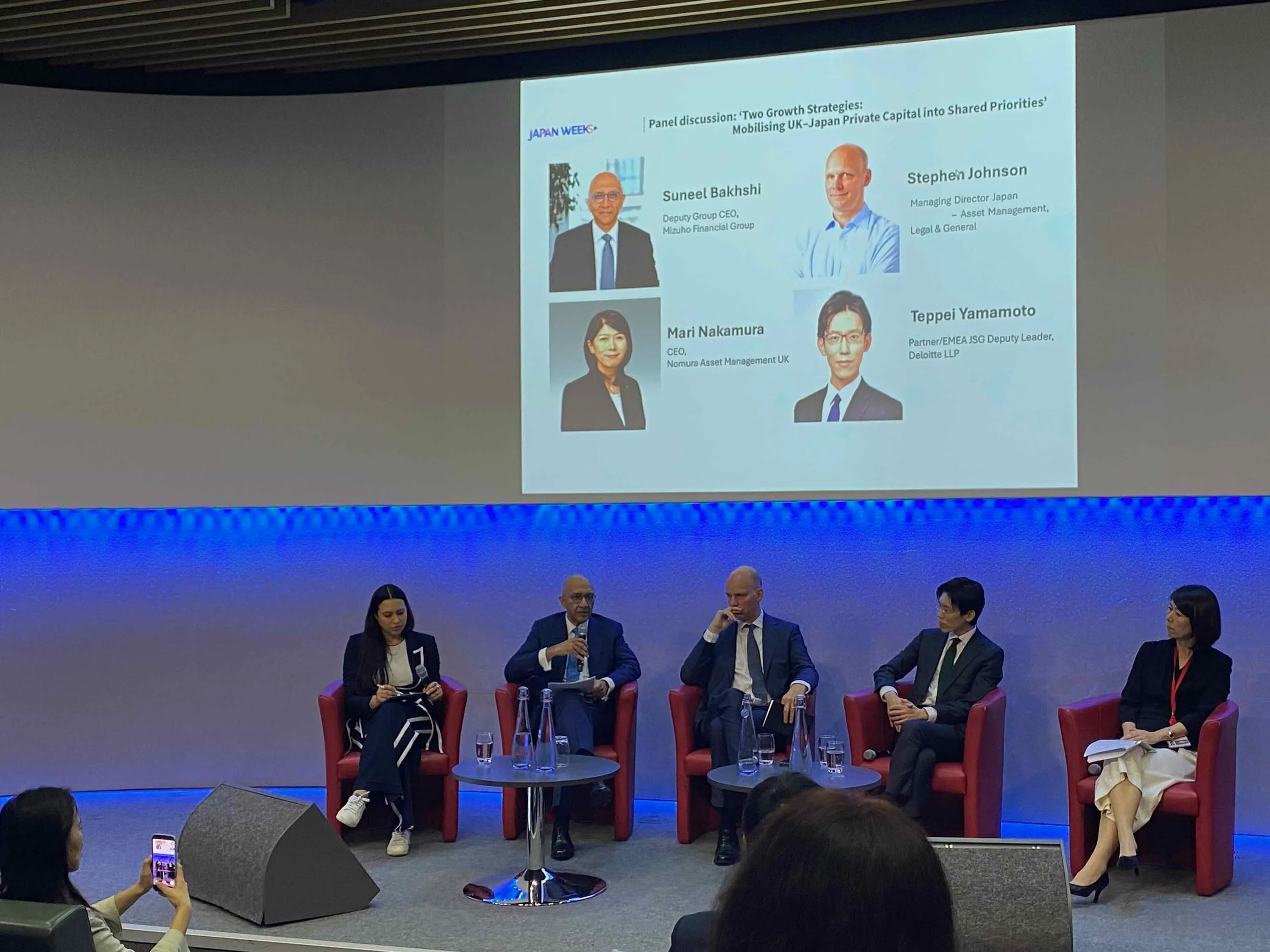
On Monday, 26 October, two days before Chancellor John Healey stood up to deliver his first Budget, something happened in the City of London that deserved more attention than it received.
At Nomura's London office in The City, the Embassy of Japan to the UK hosted it’s inaugural Japan–UK Financial Seminar, where a room full of senior figures from Japanese and British finance, government and industry laid out a vision for bilateral capital flows that, if even half of it materialises, will reshape how both countries fund their futures. The seminar was followed by a reception at Mansion House hosted by Dame Susan Langley, the Lady Mayor of the City of London, alongside Ambassador Hiroshi Suzuki, bringing together leaders from across Japan's financial services sector. It was an afternoon and evening that signalled collaboration and intent.
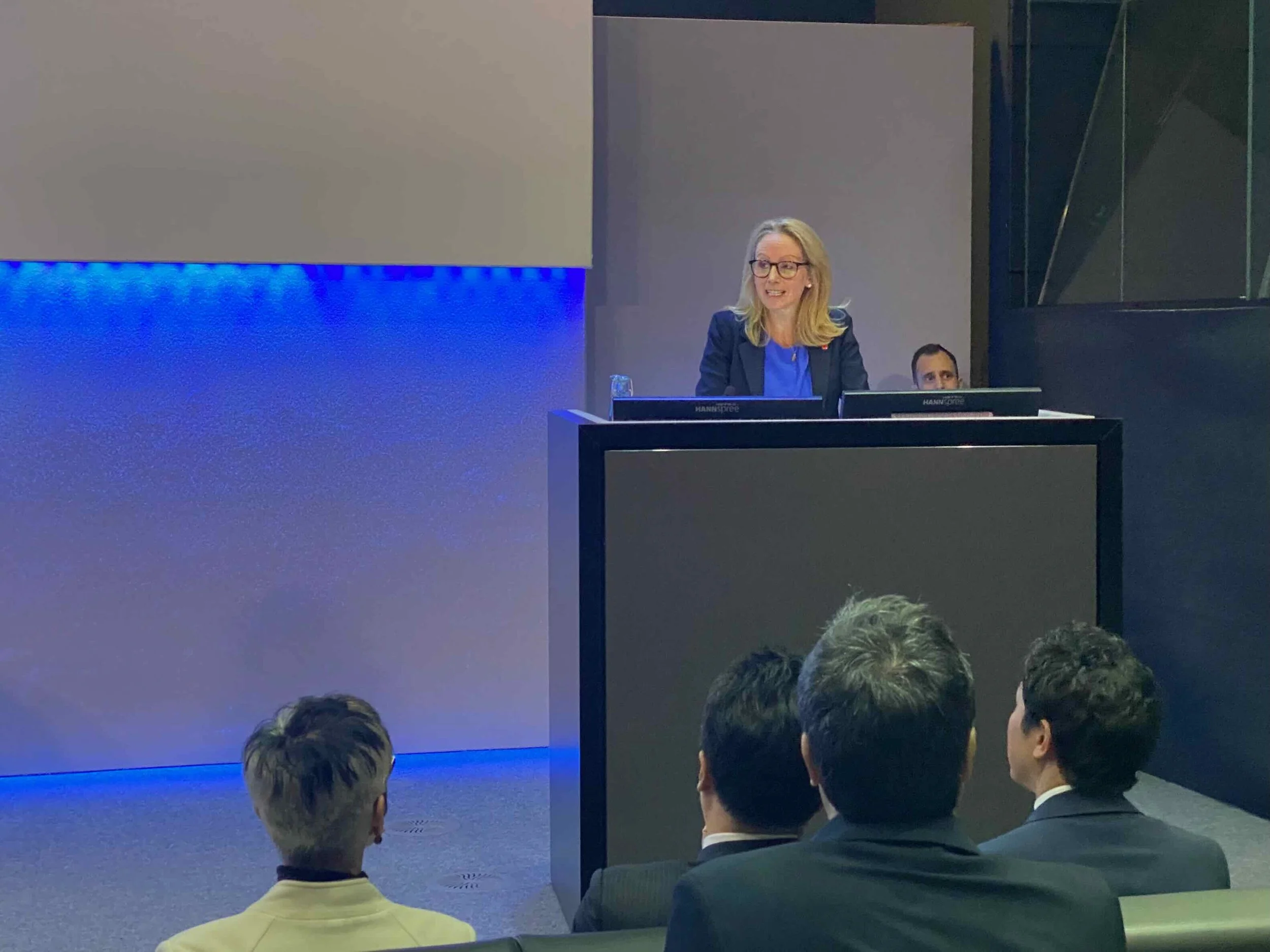
Rt Hon Lucy Rigby KC MP, Economic Secretary to the Treasury
The headline number presented was ¥373 trillion (approximately £1.8 trillion / $2.4 trillion) in public and private investment across 17 strategic sectors by 2040. That is Japan's Growth Strategy and ambition, and it is not a wish list. It comes with sector-by-sector allocations, named technologies, and a government that has maintained reform consistency across five prime ministers since 2020.
But the number that should make the UK sit up came from Japan's Ambassador to the UK, Hiroshi Suzuki. Japan, he said, has ¥2,500 trillion (roughly £12.3 trillion / $15.9 trillion) in private savings that are essentially sleeping. The task, in his words, is to "wake the money up and ask the money to go out there and work." He has a point.
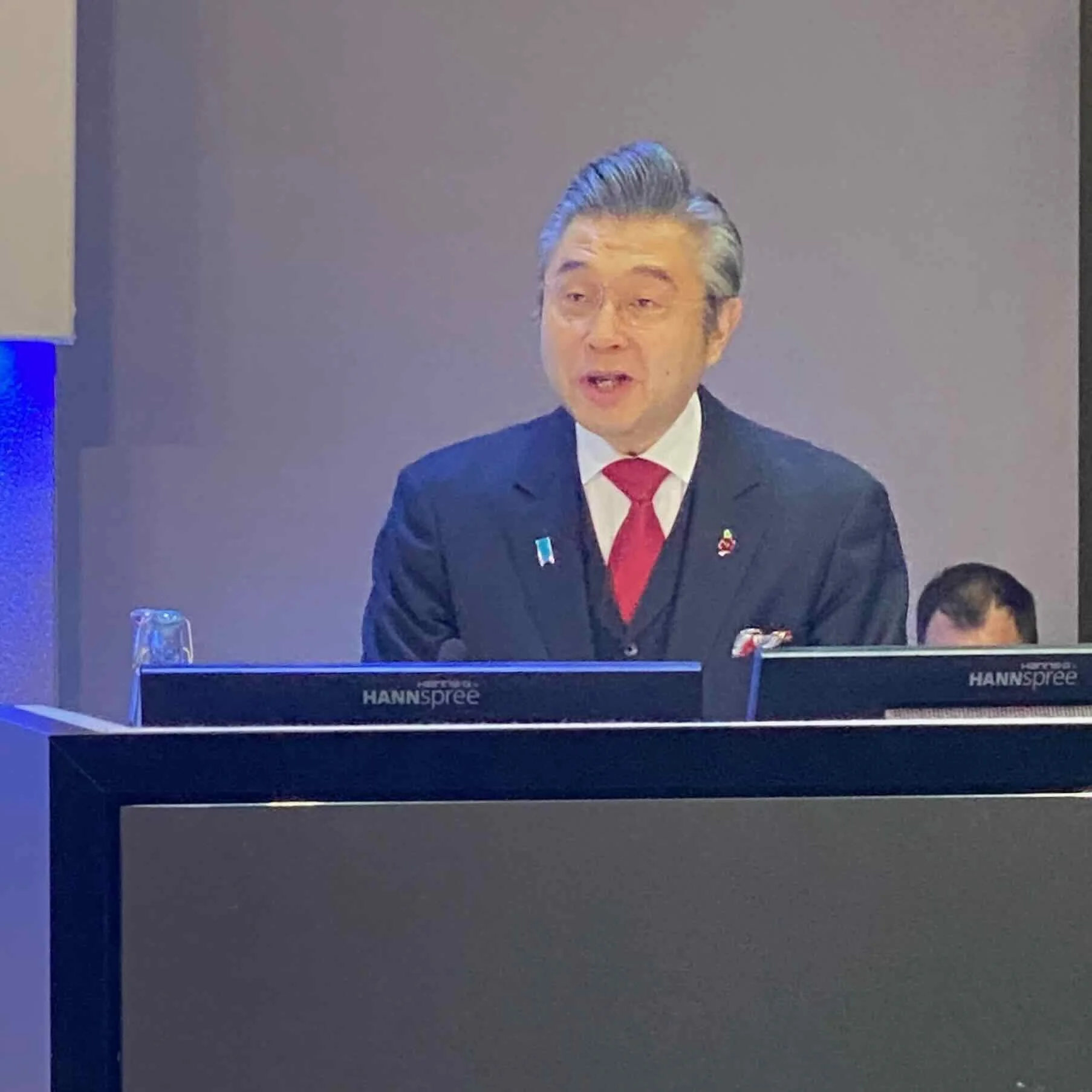
Hiroshi Suzuki, The Ambassador of Japan to The UK
That is not diplomatic and cautious language. That is a country telling the world it is open for co-investment on an unprecedented scale. And it arrived in London just 48 hours before the Burnham government's first fiscal statement, a coincidence of timing that sharpened the contrast between Japan's strategic clarity and the UK's own search for a credible growth narrative.
The signal beneath the strategy
What struck me most about Japan Day was not the scale of the numbers, though they are extraordinary, but the consistency of the message beneath them.
Every Japanese speaker, from Minister of State for Financial Services Satsuki Katayama to Mizuho's Deputy Group CEO Suneel Bakhshi, was making the same essential argument: Japan's value proposition has shifted from stability alone to what Katayama called "stability combined with new dynamism." This is not a temporary shift, she said. It is a structural transformation.
That distinction matters. For decades, international investors looked at Japan through a defensive lens: safety, yield, predictability. What Japan is now asking the world to see is something more ambitious. A country that has maintained the discipline investors trust while building the industrial architecture for growth in semiconductors (more than ¥100 trillion / £490 billion / $640 billion allocated), AI, energy security, drug discovery and advanced manufacturing. This is an industrial strategy similar to what the UK set out in 2025.
Bakhshi made the most sophisticated version of this argument. Japan's real competitive advantage, he added, is not its individual industries but how its industrial ecosystem works together: the precision of coordination across complex manufacturing processes that makes Japan indispensable in critical supply chain nodes. In a world where supply chains are fragmenting along geopolitical lines, that indispensability is strategic leverage.
He also made a point that deserves wider attention. Japan's demographic challenges, the ageing population and the labour shortages, are not merely risks. They are an opportunity. Japan is ahead of every other major economy in confronting these trends, which means Japan is the test environment. The solutions it develops in healthcare, robotics, elder care and labour productivity will be exportable intellectual property. The UK, facing the same demographic trajectory with a 10–15 year lag, should be watching closely.
What the UK can learn
The UK has capital, financial expertise and a regulatory environment that, despite its complexity, remains one of the most sophisticated in the world. UK asset managers look after £5.1 trillion on behalf of overseas clients. What it lacks, and what Japan has, is a coherent industrial strategy that connects government investment priorities to private capital deployment with the kind of sector-by-sector specificity that gives investors confidence.
With Chancellor John Healey and Prime Minister Andy Burnham preparing to set the UK's own fiscal direction on Wednesday, Japan's model offers a pointed comparison. Japan has had five prime ministers since 2020, yet the reform process has transcended changes in political leadership. The officials who drove the second Abe administration's reforms are today supporting the Takeuchi government's agenda at much more senior positions. That consistency, policy continuity that survives political change, is something the UK has historically struggled to deliver. It will be interesting to see whether this week's Budget begins to change that.
Stephen Johnson, L&G's Managing Director for Japan, outlined the commercial opportunity in concrete terms. The UK's defined benefit pension market stands at £1.7 trillion, with £500 billion expected to move through buy-in and buy-out over the next decade. L&G allocates roughly 40% of bulk annuity assets to direct investments with a UK bias. That is a vast pipeline of capital seeking infrastructure, housing and real assets, and Japanese companies with engineering precision, construction capability and long-term project delivery expertise have a structural advantage in competing for this work.
The proof point already exists. Nomura Real Estate Development and L&G have a joint venture building more than 1,000 build-to-rent homes across London. Johnson described this as harnessing Japanese "purpose and capability as much as Japanese money." That formulation captures something important about where bilateral investment is heading: not capital flows in one direction, but genuine co-investment where each side brings what the other needs.
Japan as a case study in corporate innovation
This is where the opportunity becomes most interesting for the UK's innovation ecosystem.
Japan's Growth Strategy is not a government spending programme. It is a framework designed to catalyse private investment by giving institutional and corporate investors the predictability they need. Ambassador Suzuki described fundamental budget reforms to enhance multi-year predictability, including multiple-year budget requests for critical sectors. If Japan implements these, it removes a structural barrier that has frustrated international partners for decades.
The four priority sectors Bakhshi identified tell the story: resources and energy security (¥29 trillion / £142 billion / $185 billion), digital and cybersecurity (¥55 trillion / £270 billion / $350 billion), semiconductors and AI (more than ¥100 trillion / £490 billion / $640 billion), and drug discovery and advanced medical care (¥64 trillion / £314 billion / $408 billion). Together they account for more than half of the total investment and more than half of the projected economic spillover. These are sectors where Japanese corporations have deep technical capability and where the UK has world-class research infrastructure, particularly in the London–Oxford–Cambridge "Golden Triangle" for life sciences.
What Japan demonstrates, and what the UK should study, is how a country can turn industrial strategy into a framework that corporates use to commercialise innovation. Japan's approach, built on ecosystem precision, long-term commitment and government as catalyst rather than sole funder, offers a model that the UK's fragmented innovation landscape could learn from. The UK has brilliant science and a deep venture capital market. What it needs is the connective tissue between research excellence and commercial deployment at scale. Japan has been building that connective tissue for decades.
The missing piece: soft power
During a separate fireside chat at the RSA that afternoon, I asked Rebecca Salter CBE, President of the Royal Academy of Arts, about Japan's soft power: whether the cultural influence of manga, anime, gaming and Japanese design is playing a bigger role in how Japan is perceived internationally.

Rebecca Salter CBE, President, Royal Academy of Arts: Japan in a Turbulent World
Her response was candid. She expressed disappointment that Korean soft power (K-pop, Korean cinema, Korean cuisine) has overtaken Japanese soft power in global perception. "I would like more Japanese soft power," she said. A fair point, as I remember discussing this with a Japan government entity during the last 12 months when we chatted about nation branding and the value that it can help unlock.
This matters more than it might appear. In October 2026, the Japanese government announced a formal push to promote soft power diplomacy through manga and anime. The timing is not a coincidence as Japan understands that cultural perception shapes investment perception. A generation of fund managers, analysts and policymakers who grew up watching Studio Ghibli films and reading manga brings an instinctive cultural affinity for Japan that previous generations lacked. But cultural affinity alone is not strategic influence. It needs to be woven into the investment narrative.
Salter offered a concept that captures this beautifully. She described what she called a "calligraphy mindset," learned from her six years studying art in Kyoto: years of practice to develop skill, then holding that skill until the moment of commitment. The qualities she listed, precision, consistency, purpose, capability, substance, narrative, delivery, read like a description of what international investors actually look for in a partner.
If Japan can connect its cultural influence to its investment narrative, showing the world not just what it makes but how it thinks, the soft power gap closes. That connection between perception and capital is where the real opportunity lies, for Japan and for anyone advising on how trust translates into investment.
Where this leaves us
Japan is asking the world to co-invest in its future. It is doing so with a level of strategic specificity, political consistency and institutional commitment that is rare in the current and fragmented global environment. The UK, with its deep capital markets, financial expertise and complementary innovation strengths, is a natural partner.
But partnership requires understanding. It requires knowing that Japanese decision-making is not slow; it is precise. That Japanese institutions value trust above transaction speed. That the opportunity is not to invest in Japan but to invest alongside Japan, as Bakhshi put it, as it grows.
The money is waking up. The question, as Chancellor Healey prepares to set the UK's own course, is whether Britain is ready to meet it.
This article is based on the author's attendance at Japan Day events on 26 October 2026, including the inaugural Japan–UK Financial Seminar at Nomura, the Mansion House reception hosted by Dame Susan Langley, the Lady Mayor of the City of London. All data points have been verified against published sources.