Hormuz Is Closed. Where Is the Safe Haven for Capital?
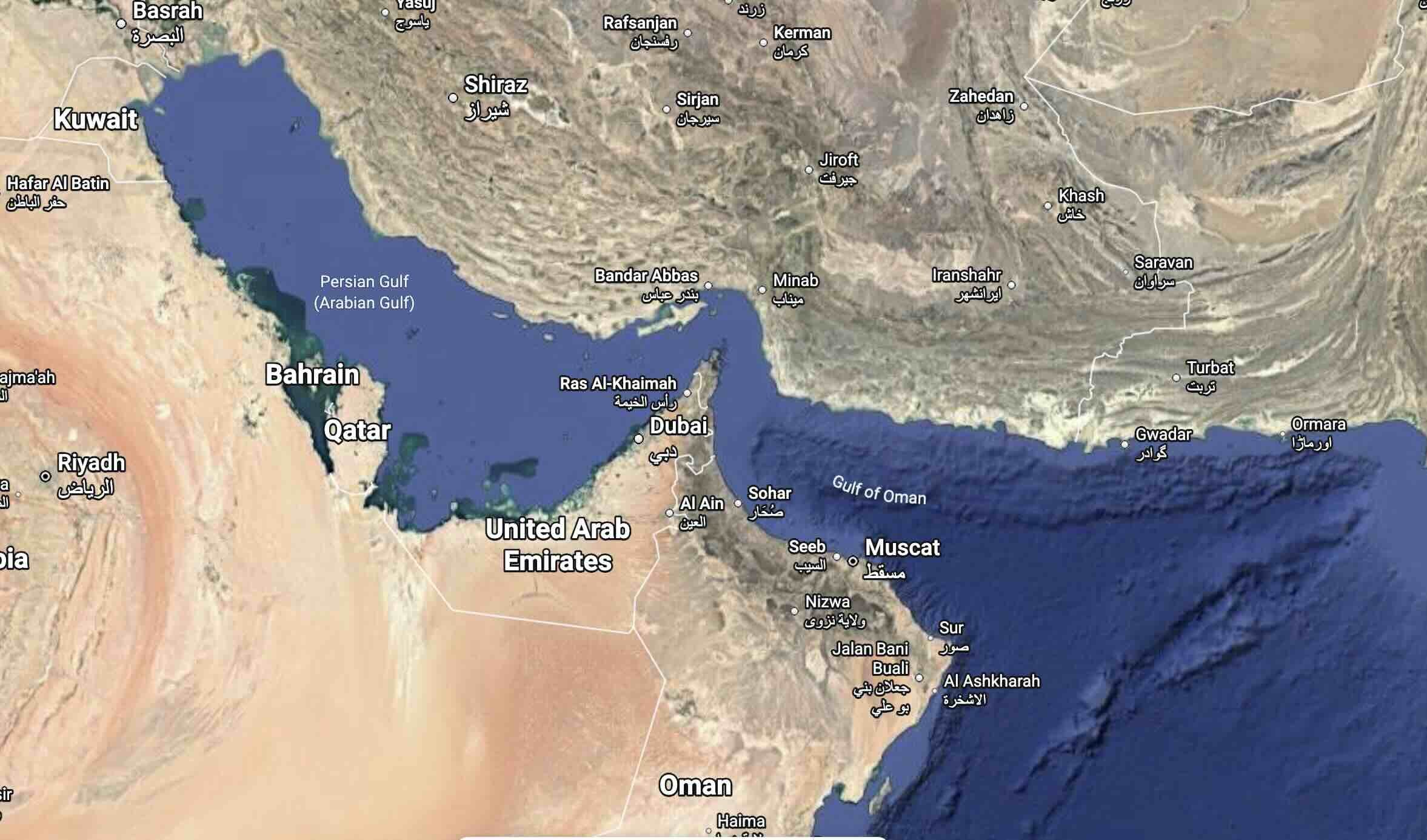
On 28 February 2026, the United States and Israel launched an air war against Iran. Within hours, the Strait of Hormuz, through which a quarter of the world’s seaborne oil and a fifth of its liquefied natural gas (LNG) had flowed in peacetime, was effectively closed. Ship transits collapsed from around 130 per day to single figures. Brent crude, which had started the year at $61 a barrel, surged past $100 within two weeks and has since fluctuated between $90 and $120, driven as much by presidential statements and diplomatic signals as by supply fundamentals.
The International Energy Agency has called it the largest supply disruption in the history of the global oil market. The Dallas Federal Reserve has modelled scenarios in which global GDP growth could fall by up to 1.3 percentage points if the disruption persists. UNCTAD warns that global merchandise trade growth could decelerate from 4.7% in 2025 to as low as 1.5% in 2026.
These are the headline numbers. But behind them lies a quieter, more consequential shift. Capital is moving. Not just in response to price signals or yield differentials, but in response to something harder to quantify and far more powerful: the perception of where it is safe, welcome, and trusted.
This is the story that matters. And it is the story that most market commentary misses.
The perception cascade
Geopolitical shocks do not operate in isolation. They cascade through systems, each disruption altering the perception of what comes next. The Hormuz closure is not just an energy event. It is a trust event. It has forced every institution that moves capital across borders to recalculate not just its exposure, but its confidence in the systems, relationships, and assumptions it relies on.
Consider the chain. The war closes the Strait. Energy prices spike. Japan, which imports roughly 70% of its oil through Hormuz, faces an acute supply vulnerability. Japanese refiners ask the government to release stockpiled oil. The yen fluctuates. Japanese institutional investors, already navigating a $550 billion commitment to invest in the United States as part of a tariff deal, must now recalculate their global allocation under a fundamentally different risk landscape.
Meanwhile, GCC sovereign wealth funds, sitting on over $5 trillion in combined assets, face a paradox. Higher oil prices boost revenues, but Iranian strikes on Gulf airports, energy infrastructure, and financial districts have exposed the vulnerability of assets that were assumed to be safe. The perception of the Gulf as a stable, diversifying economy is being tested in real time. JPMorgan has already lowered its 2026 non-oil growth forecast for GCC economies by 0.3 percentage points due to increased regional uncertainty.
In Southeast Asia, Singapore and Malaysia are watching capital flows with particular attention. As mobile wealth seeks perceived stability, Singapore’s position as a neutral, well-regulated, rule-of-law jurisdiction is attracting capital that might previously have stayed in the Gulf or moved to London. Malaysia, with its Islamic finance infrastructure and its positioning between China and the West, is navigating its own perception challenge: how to attract capital without being seen as aligned with any single power bloc.
And in Europe, the UK is caught between opportunity and vulnerability. Japanese investment stock in the UK stands at £102 billion. Nearly 1,000 Japanese companies operate here. But the UK is also exposed to the energy shock through diesel supply chains, LNG pricing, and the broader inflationary pressure that the Hormuz closure is driving through the global system.
Each of these is a perception story as much as an economic one. The question is not just where the numbers point. It is where confidence sits.
The behavioural dynamics of capital under stress
Behavioural economics offers a useful lens for understanding what is happening. Three dynamics are particularly relevant.
Loss aversion. In uncertain environments, the fear of losing what you have outweighs the desire for new gains. This is why capital under stress does not simply seek the highest return. It seeks the most trusted environment. Institutions are not optimising for yield. They are optimising for the perception of safety, a subject that I have already written about after the start of this conflict. This explains the surge in Japanese purchases of UK gilts in late 2024 and early 2025, when Japanese investors bought £2.1 billion in a single month, the highest since 2021. It was not just about yield differentials. It was about perceived stability relative to continental European alternatives that felt politically and economically uncertain.
Anchoring. Institutions tend to anchor their expectations to pre-crisis assumptions. Many Japanese corporates are still operating on the assumption that their $550 billion US investment commitment is the defining strategic question. Many GCC investors are still anchored to the assumption that the Gulf is a safe base from which to deploy capital globally. The Hormuz crisis has disrupted both anchors. But cognitive adjustment is slow. The organisations that recognise their anchors have shifted, and communicate that recognition to their stakeholders, will navigate this period more effectively than those that pretend nothing has changed.
Herding. When uncertainty is high, capital follows capital. This is why Singapore is currently attracting disproportionate inflows relative to its economic size. It is why London’s position as a financial hub is being reinforced, not eroded, by the current crisis, at least for now. And it is why the narrative around where capital is moving matters as much as the actual flows. If enough institutions signal that they are increasing their UK or Singapore allocation, others follow. Perception creates reality.
There is a further dimension to this cascade. The United States itself is experiencing something that would normally only happen to an emerging market: investors questioning not the fundamentals but the institutional predictability of the system. Market analysts call it the ‘Sell America’ trade, the simultaneous decline in US equities, Treasuries, and the dollar. The triggers have been cumulative: the Liberation Day tariffs, the Greenland threats, attacks on Federal Reserve independence, and the Iran war. The US dollar has fallen 9.4% over the past 12 months despite the economy growing at 4.4% and the war in and with Iran is not helping how the dollar is perceived. In January 2026, the US recorded a net capital outflow of $25 billion, reversing a $212 billion inflow just two months earlier (US Treasury, March 2026). The structural exposure is significant: the US net international investment position stands at negative $27.61 trillion. Even a marginal shift in how global capital perceives the US, from unconditional safe haven to conditional safe haven, changes the calculus for every sovereign wealth fund, pension fund, and institutional investor allocating across borders. Capital questioning the US does not disappear. It goes somewhere.
Thanks for reading Reputation Matters! This post is public so feel free to share it.
JP Morgan Private Bank has argued that the structural constraints on a full ‘Sell America’ trade are too great for it to be sustained. They may be right on the mechanics. But the point is not whether capital can fully exit the US. It is that the perception of unconditional safety has become conditional. And in a world where trust drives allocation, conditionality changes everything.
Japan: waking up capital in a world on fire
Japan’s story is particularly instructive. At the Japan-UK Financial Networking Reception at the Embassy of Japan in London last month, Ambassador Hiroshi Suzuki was refreshingly direct. Japan’s capital, he acknowledged, has been sleeping. It is now time to wake it up and make it work harder. The government is pushing reforms across the entire investment chain, from households to corporates to asset managers, and is actively repositioning Japan as a leading global asset management centre.
The numbers behind this are significant. Japan’s Financial Services Agency is advancing a revision to the Corporate Governance Code that targets over £600 billion (approximately ¥126 trillion) in dormant corporate cash. The NISA programme has expanded to the point where one in four Japanese adults now holds a tax-exempt investment account. Foreign investors have poured approximately ¥13.5 trillion into Japanese equities since Q2 2025, pushing the Nikkei 225 past 50,000 for the first time. And Japan has quadrupled its budget for AI and semiconductors to £1.23 trillion (£6 billion) for fiscal year 2026.
But here is the tension. Japan is simultaneously being asked to commit $550 billion to the United States as part of a tariff deal, maintain its UK and European investment positions, navigate an energy crisis that has exposed its near-total dependence on Middle Eastern oil transiting the Strait of Hormuz, and manage a relationship with China that has deteriorated sharply since Prime Minister Takaichi’s November 2025 comments about Taiwan.
The perception challenge is acute. Japanese institutions must communicate confidence and strategic clarity to multiple audiences simultaneously: their domestic shareholders, their international partners, the US administration, and their own employees. The organisations that manage this perception landscape effectively will retain trust and attract capital. Those that do not will find themselves squeezed between competing demands with no clear narrative to hold them together.
The GCC: when the safe haven is no longer safe
The Gulf Cooperation Council states face a different but equally consequential perception challenge. For decades, the narrative has been one of transformation: oil revenues converted into diversified economies, sovereign wealth deployed into global markets, and ambitious national visions (Saudi Arabia’s Vision 2030, the UAE’s We the UAE 2031, Qatar’s National Vision 2030) signalling a post-hydrocarbon future.
The Iran war has disrupted that narrative. Iranian strikes have hit Gulf airports, energy infrastructure, and financial districts. Saudi Arabia’s oil production capacity has been reduced by approximately 600,000 barrels per day following attacks on facilities. The perception of the Gulf as a stable base for global capital deployment is being tested.
GCC sovereign wealth funds, the so-called Oil Five (PIF, QIA, ADIA, Mubadala, ADQ), collectively manage over $5 trillion. Their investment strategies have been evolving toward a multipolar model, with increasing allocations to Asia, Africa, and domestic mega-projects. But the current crisis is forcing a recalculation. New bond and sukuk issuance from GCC borrowers has paused as markets price in a war premium. Global companies are reviewing their regional strategies and, in some cases, beginning to shift capital to other hubs.
The critical insight is that what is happening here is not primarily about oil prices or military risk. It is, again, about perception. The question investors and partners are asking is not whether the Gulf is physically safe right now. It is how the perception of safety has shifted and is this permanent. And perception, once shifted, is extraordinarily difficult to reset. Yet, you cannot and should not write-off the region.
ASEAN: the quiet beneficiaries
Singapore and Malaysia, countries I’ve known for over 15 years, are emerging as beneficiaries of this perception shift. Singapore’s position as a neutral, transparent, well-regulated jurisdiction with strong rule of law and no geopolitical baggage makes it a natural destination for capital seeking perceived safety. Malaysian Islamic finance infrastructure positions it as a bridge between the GCC and Asia, though it faces its own perception challenges around alignment and neutrality.
The flows are already visible. Wealth management assets in Singapore have been growing at double-digit rates. Family offices, as I have presented before, are relocating or establishing secondary presences. And the ASEAN region more broadly is benefiting from the supply chain diversification that was already underway before the Hormuz crisis accelerated it.
But there is a risk here too. Singapore and Malaysia can absorb incremental capital, but they cannot absorb a wholesale reallocation from the Gulf or from Japan’s international portfolio without creating their own distortions. The perception of capacity matters as much as the perception of safety.
What this means for organisations navigating the landscape
The organisations that will navigate this period most effectively are not necessarily the ones with the best trading desks or the most sophisticated risk models. They are the ones that understand four things.
First, perception is not a communications problem. It is a strategic one. How an institution is perceived by the stakeholders whose confidence it needs, investors, partners, regulators, governments, employees, determines its capacity to operate. In a period of compounding geopolitical shocks, managing that perception is not a nice-to-have. It is an operational necessity.
Second, trust is the pre-condition for every cross-border relationship. Deals, partnerships, market entries, and policy collaborations all depend on trust between parties who may not share the same legal system, cultural norms, or information environment. When geopolitical events disrupt the assumptions on which that trust was built, it needs to be actively rebuilt, not assumed to persist.
Third, narrative matters. The story an institution tells about itself, where it sits in the world, what it stands for, how it is navigating uncertainty, is not peripheral to its strategy. It is central to it. Investors do not allocate capital to spreadsheets. They allocate capital to stories they find credible. The organisations that can articulate a clear, honest, and compelling narrative about their positioning in this environment will attract confidence and capital. Those that cannot will lose both.
Fourth, geopolitical intelligence is no longer optional. Understanding how policy shifts, trade dynamics, energy disruptions, and diplomatic relationships affect the perception of markets, institutions, and asset classes is now a core competency for any organisation that operates across borders. This is not the domain of think tanks and foreign ministries alone. It belongs in the boardroom, the investment committee, and the client conversation.
The opportunity in the uncertainty
Crises redistribute advantage. The Hormuz closure, the tariff uncertainty, the governance reforms in Japan, the GCC’s perception challenge, the quiet rise of ASEAN: these are all creating new patterns of capital flow, new partnership opportunities, and new demands for the kind of advisory and insight that connects geopolitical understanding with stakeholder trust.
For the UK specifically, the opportunity is significant. With £102 billion of Japanese investment stock, nearly 1,000 Japanese companies, deep institutional relationships through the Hiroshima Accord, CEPA, CPTPP, and the Financial Regulatory Forum, and a financial services sector that accounts for over 54% of UK exports to Japan, the UK is not just a market. It is a trust infrastructure. The question is whether the UK and the institutions within it can articulate that value clearly enough to retain and grow their position in a world where every capital relationship is being re-evaluated.
At the same time, the UK’s re-emergence as a bridge between international capital and the EU, reinforced by frameworks like Horizon Europe and the Berne Financial Services Agreement, represents an opportunity that institutions on both sides of the corridor should not underestimate.
The same question applies to every institution, in every corridor, navigating this landscape. When capital moves, it does not just follow the numbers. It follows trust. And trust, ultimately, is a function of perception.
That is the space I work in. And it has never mattered more.