2025 UK Budget: Tax Rises, Tough Choices and the Missing Growth Strategy
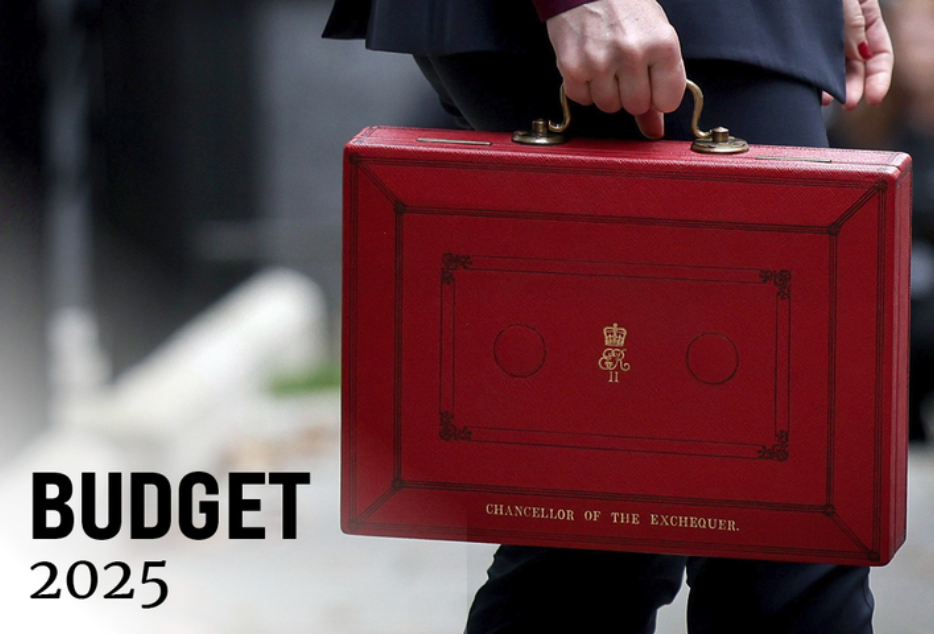
On Wednesday, the Chancellor of the Exchequer, Rachel Reeves, delivered her first full Budget. Expectations were low, and morale across business and investment circles had already been subdued. Matters were made worse by a communications failure when the Office for Budget Responsibility’s full economic outlook appeared online more than an hour before the speech. Commentators questioned whether the Treasury had control of the process and presentation.
The OBR confirmed that the Budget raises an additional £26.1 billion a year by the end of the Parliament and will push the UK tax to GDP ratio to 38.3 percent, the highest level in modern history.
Yet the central business challenge was not the leak. It was the realisation that this Budget raised revenue without offering a plan to support growth or unlock private investment. Reeves stressed stability, credibility and fiscal discipline, but delivered no significant structural reforms and no clear strategy to turn the UK’s new 10-year Industrial Strategy into action. It was an opportunity missed.
Stability has value, but stability alone cannot generate growth. If the government cannot spend heavily and will not cut taxes, then the only remaining lever is freeing businesses to invest. This Budget did not use that lever.
Tax Burden Up, Growth Tools Missing
The Budget relied heavily on revenue-raising rather than on incentives for investment or innovation. Key measures included:
Freezing income tax thresholds to 2031, pulling millions into higher tax bands
Facilitating the attractiveness of pension salary sacrifice through new caps
Raising taxes on dividends, savings and high-value property
Maintaining corporation tax at current levels with no new capital allowances
Some modest reliefs were included, such as business rate support for sectors like retail and hospitality, and a freeze on fuel duty and regulated rail fares.
But these were marginal adjustments, not part of a larger and more ambitious strategy to support growth. The Institute for Fiscal Studies described the next five years as the most significant period of sustained tax increases in modern British politics, and warned that none of the measures would improve long-term productivity or address weak business investment.
The CBI, meanwhile, argued that the Budget did not kick-start growth. And Make UK stated that manufacturers received little support.
This combination of tax pressure and absence of growth policy is the core challenge the UK must now address.
Industrial Strategy Without Delivery
Labour came into government promoting a mission-led Industrial Strategy designed to transform the UK’s economic model. The five missions introduced before the election focused on clean energy, AI and digital transformation, national resilience, life sciences and advanced manufacturing.
But the Budget did not deliver the mechanisms needed to turn these missions into reality.
There were:
No major expansions of R&D tax credits
No large-scale planning reform for infrastructure, labs or industrial sites
No significant capital markets redesign
No new tools for the AI, biotech or energy sectors
No new talent or visa reforms to help scaling companies
No regulatory streamlining to accelerate investment
In other words, the Industrial Strategy remains a narrative, not a delivery system.
Private capital leaders noted this gap. Several commentators argued publicly that the Budget did not match the scale of the economic ambitions the government had set for itself. They noted that the missions are credible, but they remain ambitious rather than actionable frameworks without the tools needed to deliver them.
Private capital leaders reacted quickly. Many argued that the ambitions are credible but lack the tools needed to support them. A strategy without regulatory and investment mechanisms remains an expression of intent rather than a plan.
Reform Needed When Spending Is Limited
The government has inherited a challenging fiscal environment. Public debt is high, borrowing costs remain above the levels of the 2010s, and public services require investment. Fiscal rules limit flexibility.
But fiscal constraints do not prevent growth. They simply change its source.
If the state cannot spend, private capital must. That requires a regulatory, administrative and investment environment that enables businesses to deploy capital at speed. The UK has world-class regulators, but processes are often slow, fragmented or outdated.
To unlock growth within fiscal limits, the UK needs to focus on:
Planning reform
Capital Markets Modernisation
Faster regulatory approvals
Improved talent mobility
Local investment flexibility
Unlocking corporate and family-owned capital
The 2025 Budget did not pursue these at the scale required.
Five Structural Barriers to Growth
1. Slow planning and land use decisions
Clean energy developers, lab operators, manufacturers and housing providers all face multi-year approval timelines. A fast-track route for nationally significant projects would unlock billions in private investment.
2. Uncompetitive capital markets
The UK continues to lose listings to New York and Amsterdam. There were no reforms to dual-class shares, listing friction, or pension fund investment rules.
3. Fragmented regulatory processes
In areas such as medicines approvals, energy permitting, AI governance and environmental regulation, firms face slow and complex processes. Faster decisions require modern workflows rather than lower standards
4. Talent and visas remain a bottleneck
Science, engineering and technology firms need faster access to skilled workers. The Budget made no progress on talent mobility or training system modernisation.
5. Local partners lack investment tools
Local authorities cannot borrow or co-invest flexibly.
Local authorities cannot borrow or co-invest flexibly. Unlocking regional investment could drive growth far beyond the Oxford-Cambridge-London corridor, supporting clusters in the West Country, the Midlands, Manchester and Scotland.
In each case, reform would be low-cost but high-value.
The Gap Between Slogans and Policy
One of Reeves’s most repeated lines was: “If you build here, Britain will back you.”
Business leaders welcomed the sentiment but emphasised that building in Britain requires predictable conditions, access to capital and a regulatory system that supports speed.
Investors and founders echoed the same message. They also pointed out that without growth, fiscal headroom will not last. Representatives from private capital noted that avoiding damaging tax changes was positive, but long-term support for EIS, VCT and share option schemes must be part of a much larger growth plan.
The pattern is consistent. The government has been strong on messaging, but so far weak on mechanisms and bringing everything together. Without mechanisms in place, confidence erodes, and companies inevitably look abroad for scale.
The UK remains an excellent greenhouse for innovation. The problem is that scale often happens elsewhere.
Untapped CVC and Family Capital
Corporate Venture Capital is one of the fastest-growing sources of global innovation funding. The United States, Japan and South Korea use it to accelerate commercialisation and industrial transformation.
The UK has not built the framework needed to support CVC investment. The Budget could have:
introduced incentives for corporate investment in UK innovation
allowed CVC investments to offset part of the corporate tax
supported corporate university partnerships
encouraged family-owned businesses to join regional investment clusters
These measures would have mobilised billions in private capital at no cost to the taxpayer. Their absence weakens the Industrial Strategy, because missions cannot be delivered without financing systems that match their ambition.
Private Capital Ready, Government Not
Following the Budget, several high-profile industry leaders responded publicly. Their messages varied in detail, but all reflected the same concern.
Some welcomed short-term fiscal stability and the avoidance of more severe tax changes.
Others emphasised the need for investment pathways that support scaling firms.
Financial analysts pointed out that increased headroom does not create long-term growth.
Several noted that the UK risks becoming uncompetitive if it does not act soon.
These statements collectively show that private capital is aligned with the government on the need for stability, but is not seeing the parallel reforms that create opportunity. In other words, the investment community is not resisting the government’s plans. It is waiting for the government to match ambition with action.
Again, an issue of the time it takes to share the ambition and establish policy incentives that free and reward businesses to invest in earmarked sectors.
Fiscal Stability Is Not Growth
Tax rises alone cannot solve the UK’s economic challenge. Fiscal consolidation may be necessary, but it is insufficient.
Without structural reform, regulatory streamlining, modern planning systems, capital markets reform and incentives for corporate and family-owned investment, the UK risks missing its growth opportunity.
The 2025 Budget brought stability but not renewal. It raised revenue but did not unlock investment. It offered ambition in language but not in delivery.
If the government wants businesses to build in Britain, it must back them with policy, not words.
The UK has the institutions, talent and scientific strengths to lead globally. Unlocking that potential now depends on freeing businesses to grow.