Reputation risk
Your reputation is how the people who decide your future see you: investors, regulators, partners and governments. When that view drifts from the facts, capital costs more and doors, opportunities and markets close.
I have spent 25 years helping leaders spot that drift early. First, I find out what your stakeholders really think. Then I help you close the gap, before someone else defines it for you.
See how I work or start a conversation.
Start here
Latest insights
US investors now fund 47% of European defence tech. Rules are not what is holding UK defence investment back. Perception and reputational risk is, and it is costing Britain and Europe ownership of its own security.
Why Man City's reported guilty verdict on 114 of 115 charges isn't just a problem for the club and its fans, and why rival clubs, the Premier League, Abu Dhabi and Britain's reputation for fair play all pay the price.
Reputation, trust, and misinformation risk have moved to platforms and AI chatbots. What the Reuters Institute for the Study of Journalism 2026 Digital News Report mean for investor and technology company trust and reputation strategy.
Two landmark global studies published this month reveal something the AI industry is not yet ready to hear. Public trust in AI is falling in the markets that matter most, and the information environment through which people form their opinions about it is in crisis. This is not a communications problem. It is a strategic one. Julio Romo draws on data from the Ipsos AI Monitor 2026 and the Reuters Institute Digital News Report 2026 to examine what the signals mean for AI companies, governments, and investors, and why tactical communications is making the trust deficit worse, not better.
Single family offices are becoming institutions at record pace, with independent directors, professional CIOs and formal succession plans. With the sector’s AUM set to exceed the global hedge fund industry by 2030, governance is only half the story. This article argues that reputation is now the most underpriced asset a family holds, and sets out why.
FIFA’s pricing strategy for the 2026 World Cup risks doing lasting damage to football’s reputation in North America. By prioritising short-term revenue over accessibility and atmosphere, FIFA is undermining the fan culture that gives the game its global appeal. In a market where football still competes with established sports, excluding core supporters weakens the live experience, erodes trust, and ultimately harms the long-term business of the game.
Most M&A failures are not caused by financial errors but by mismanaged perception, weak private engagement and cultural misunderstanding. Trust, reputation and strategic advisory must sit at the centre of every deal. This article explains why private communications, geopolitical fluency and cultural intelligence are now essential to securing stakeholder confidence and protecting value.
The Reuters Institute’s new report, Mapping News Creators and Influencers in Social and Video Networks, shows how online creators now shape public opinion. Governments and companies must adapt their reputation strategies to navigate this fast-moving media landscape.
A new study reveals a staggering 38-point gap between CEO concern and crisis preparedness. The root cause? Boards built for a financial era are failing in an age of compounding crises. This isn't just a communication problem, it's a direct threat to profit and valuation. This article exposes why traditional board composition is the core vulnerability and provides a clear blueprint for modernization, including the critical case for appointing a Chief Reputation Officer to safeguard your company's future.
Family offices, CIOs, and lawyers must strategically manage reputation. It's a core asset, not a tactical concern, that drives deal flow and safeguards legacy in private networks and public spheres. Learn about how you can build and protect how you and your investments are perceived.
Trust is no longer a soft value, it’s a strategic driver of profit, growth, and resilience. As global trust declines, businesses must act to rebuild and protect it to build back profitability.
Reputation is now a key driver of investment decisions across venture capital, corporate venture capital, and family offices. In this blog, we examine how trust influences deal speed, valuation, and risk, and offer practical guidance for founders and investors navigating today’s reputation-first funding landscape.
When Lavazza and Dualit advertised their coffee pods as “compostable,” the ASA ruled the claims misleading, highlighting the risks of unclear green messaging. I look at the ruling and highlight what went wrong and how brands can avoid similar pitfalls in ESG communications.
American businesses are witnessing a rise in anti-American sentiment worldwide. What is the impact of this, and how can American companies and investors that trade, invest and profit from their presence overseas protect themselves?
How is AI reshaping communications, trust, and public engagement? This article shares key takeaways from a conversation with Laura Oliver and Hans-Petter Dalen on what business, government, and newsroom leaders must understand to lead credibly in the age of generative AI.
As AI reshapes journalism, the media’s role in building—or breaking—reputation is evolving. From the printing press to generative tools like ChatGPT, I explore how trust, strategy, and media engagement must adapt to a future where truth competes with machine-generated content.
What if the recent ‘Signal Gate’ leak had happened inside a global bank? In this blog I explores how a similar breach in financial services would trigger regulatory action, reputational fallout, and investor backlash—and what leaders must learn to safeguard trust in uncertain times.
In a House of Lords inquiry, Dr Mhairi Aitken (Alan Turing Institute) and Professor Sander van der Linden (University of Cambridge) warned that AI-driven misinformation—seen by 40% of UK adults—undermines trust and reputation. They called for leaders to strengthen regulation, media literacy, and partnerships with tech platforms to uphold credibility.
Artificial Intelligence (AI) is transforming PR by dramatically improving tactical tasks like content creation and analytics. However, strategic advisory—rooted in human judgment, emotional intelligence, and cultural insight—remains essential. Leaders must blend AI efficiency with human expertise to achieve meaningful, trusted outcomes
In an era where misinformation spreads faster than facts, companies must be prepared to defend their reputation against targeted attacks—especially when they come from high-profile individuals with vast online influence. The recent controversy involving Elon Musk and Verizon’s $2.4 billion FAA contract is an example of how social media can be weaponised to undermine competitors. Musk’s comments on X (formerly Twitter) not only questioned Verizon’s technology but also influenced public perception, investor confidence, and even regulatory discussions.
This blog explores how corporate misinformation can harm corporate reputation, what businesses can learn from Verizon’s situation, and a structured approach to protecting public and stakeholder trust in the face of digital disinformation.
Legal wins mean nothing if your company loses trust. In today’s fast-moving world, reputation is as valuable as compliance. Many companies still let legal teams dictate messaging, but failing to integrate strategic communications with legal counsel can cost businesses their credibility, investors, and long-term success. From Boeing’s crisis fallout to Microsoft’s M&A triumph, this article explores why General Counsel (GC) and strategic communications must collaborate to navigate legal risks while safeguarding trust, reputation, and stakeholder confidence. Boards that fail to act risk financial and reputational losses that far outweigh any legal victory.
The 2025 Edelman Trust Barometer reveals a world grappling with distrust and grievance. Business leads as the most trusted institution globally at 62%, but growing concerns over misinformation, economic inequality, and institutional inaction threaten this fragile confidence. To rebuild trust, leaders must prioritise transparency, address societal grievances, and invest in workforce development and ethical practices. Trust is no longer a passive asset but an active strategy for sustainable growth and reputational resilience.
The Reuters Institute for the Study of Journalism 2025 Trends Report outlines how AI and technology are changing the media landscape. Here are my recommendations on how businesses and governments must adapt their communication to reach better and engage with stakeholders, and rebuild trust.
Mark Zuckerberg is ending fact-checking and content on Meta’s platforms, aligning his company with the values of the incoming Trump administration. This move increases the reputational risk to US and global companies that want to advertise on Facebook and Instagram. His view of freedom of speech has a price, will it be worth it?
Elon Musk’s political statements and attacks, are they his views, (most likely!) or tactics to safeguard his businesses and ventures (certainly!)?
Storytelling is a key pillar and a strategic tool that governments and businesses can leverage to build trust, shape perceptions, and drive action. At the recent recent Milken Institute Middle East and Africa Summit last week, the institute hosted a panel discussion titled ‘The Art of Storytelling: Shaping Culture, Identity, and Global Impact, that highlighted the value of this strategic activity to build reputation and trust.
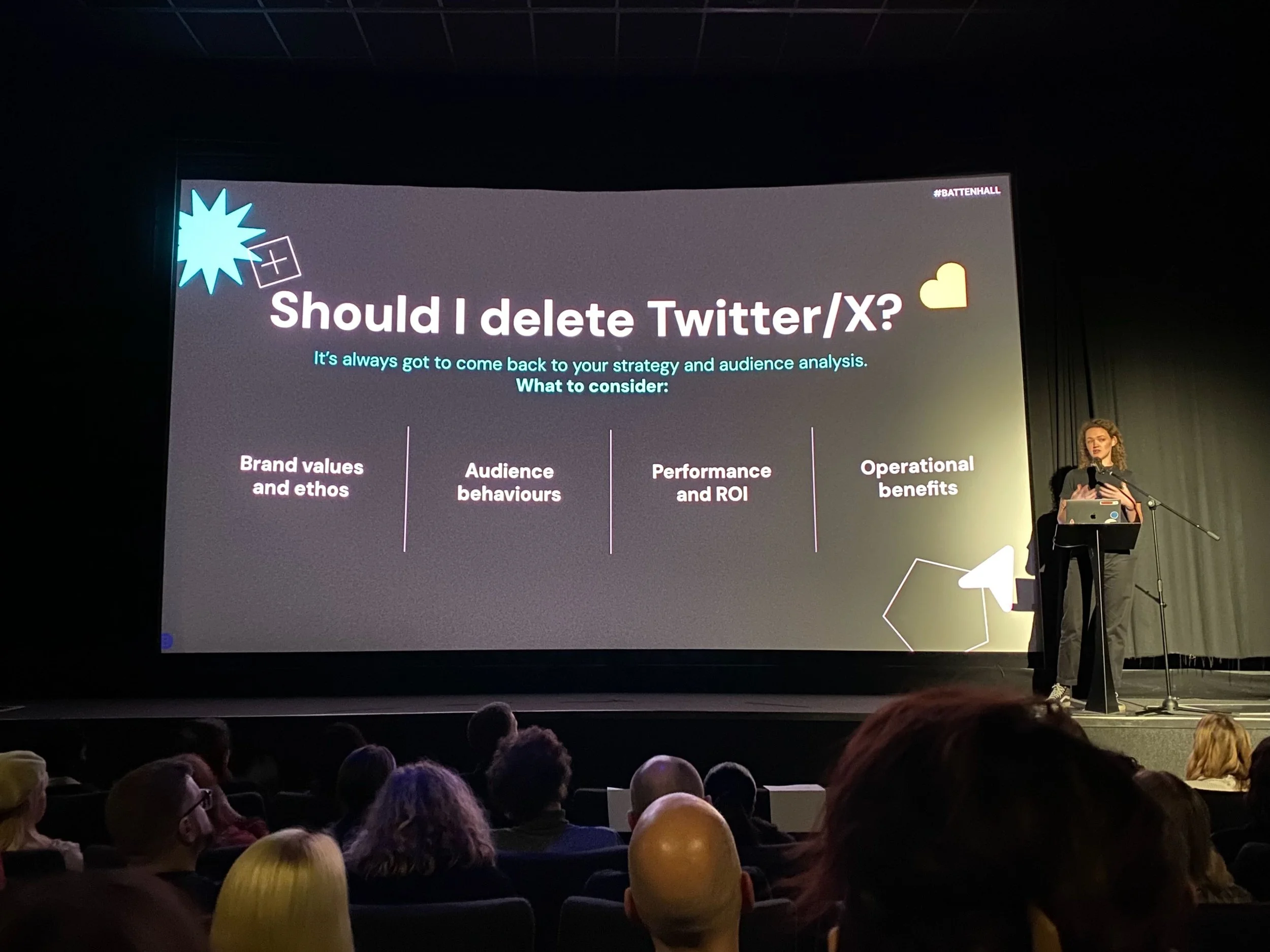
Battenhall released its 2025 ‘The Year Ahead In Social’ report, which highlighted the rise in ‘dark social’ as a channel that people continue to move towards in a hyper-polarised environment. People want relevance and authenticity from brands that engage with them. Going siloed is becoming a trend.
Has the value of celebrity endorsements in politics dropped? Considering how little influence they had in helping Harris of the Democrats win the US Election, the answer is yes. What voters want is relatability and authenticity.
McKinsey's ‘The Next Big Arenas Of Competition’ report outlines 18 key areas and sectors the firm believes will shape the world by 2040 and deliver strong financial and societal returns. To secure this, start-ups and companies in these arenas and sectors must invest in building trust and their reputation. Reputation will help unlock value and growth.
Sir Martin Sorrell is wrong. Reputation is not built through volume and reach — it is built through trust, judgement and behaviour over time. The argument that leadership communications needs.